

- $ZKC is deployed on Ethereum Mainnet and Base Mainnet.
- $ZKC is also bridged to Taiko Alethia.
- To use $ZKC in the Boundless market as Proving Collateral on an L2, $ZKC must be bridged from Ethereum mainnet to that L2.
- Provers also need a small amount of native ETH on the destination L2 to pay for
depositCollateraland ongoing market interactions.
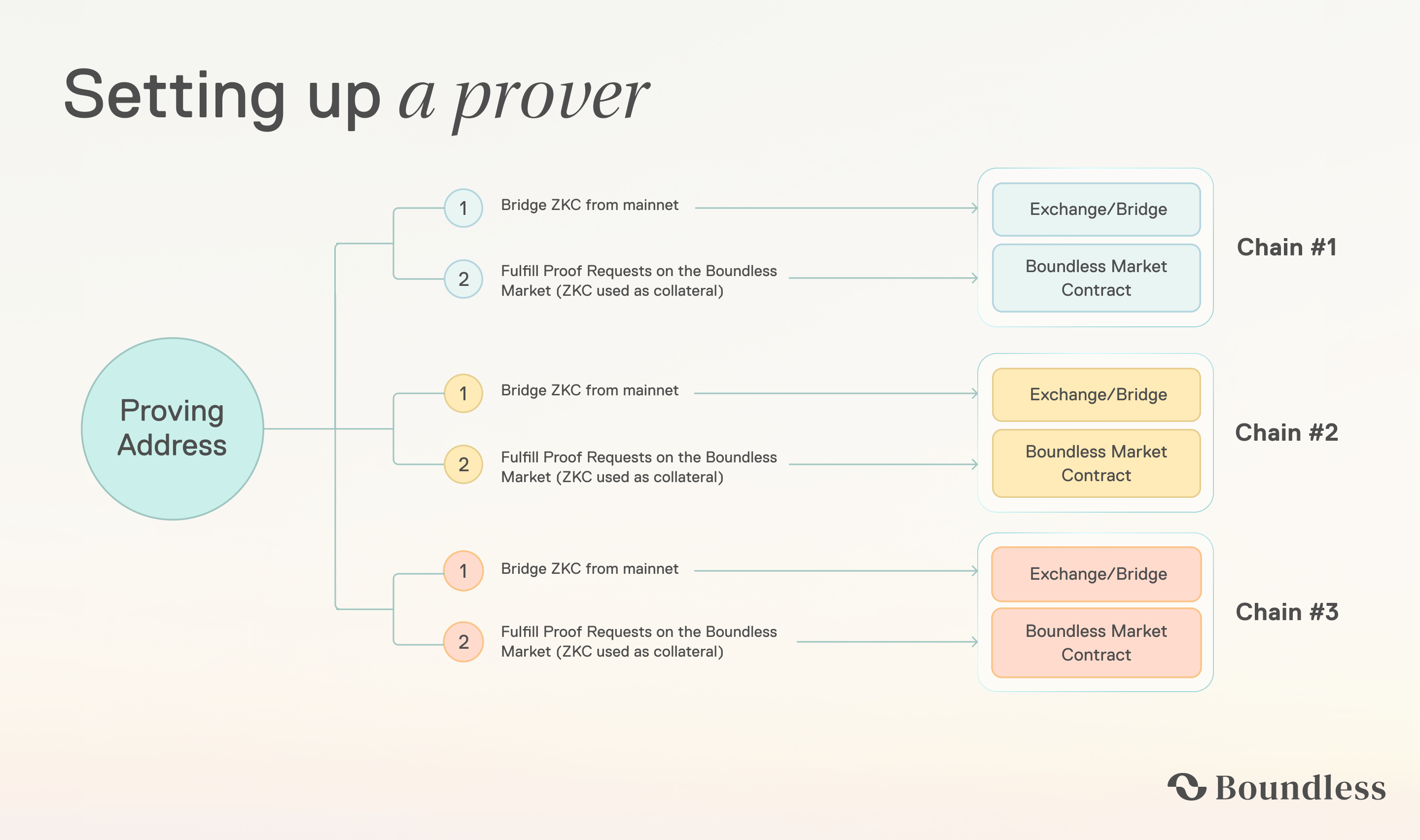
Bridging $ZKC
$ZKC is deployed at:
- Ethereum Mainnet:
0x000006c2A22ff4A44ff1f5d0F2ed65F781F55555 - (Bridged) Base:
0xAA61bB7777bD01B684347961918f1E07fBbCe7CF - (Bridged) Taiko Alethia:
0xC284A781072442cC1882a8Db4573990B7B49DaC4
Bridging using Base’s Native Bridges
To bridge $ZKC from Ethereum mainnet to Base mainnet, see the Base documentation for bridging assets to Base.Manual Bridging using cast
To start, make sure to have cast installed. This will require installing Foundry. Next, export the PRIVATE_KEY for the address holding the $ZKC tokens:
AMOUNT and ETH_MAINNET_RPC_URL environment variables:
Bridging using Taiko’s Native Bridge
Both $ZKC and native ETH are bridged through the same flow. To bridge from Ethereum mainnet to Taiko Alethia, see bridge.taiko.xyz and Taiko’s contract documentation. The Taiko relayer mints the bridged tokens on L2 a few minutes after L1 confirmation.Manual Bridging to Taiko using cast
To start, make sure to have cast installed. This will require installing Foundry. Next, export the PRIVATE_KEY for the address holding the $ZKC tokens:
AMOUNT, RECIPIENT, FEE, and ETH_MAINNET_RPC_URL environment variables:
ERC20Vault to spend $AMOUNT tokens:
ERC20Vault.sendToken. The L2 gasLimit must be at least 1,000,000: